Personal · · Peter Hanlon
The BBC Domesday Project at 40
The first word I ever typed into a computer.
40 years ago, at the age of 10, I took part in a country wide, very early citizen science project, called the Domesday project. It was launched by the BBC, which played a much broader role in society than it does now, to celebrate the 900th anniversary of the Domesday Book, originally from 1086. The concept behind it was that ordinary people, but mostly school children in year 5, would document the entire country, each taking a little slice, and creating a permanent record of what life was like in 1986. This was before the internet remember.
It was big at the time, at least it was big if you were in year 5.
A few square kilometres outside Stafford
Our school was allocated a few square kilometres outside of Stafford where I grew up, and we were lucky that it included Shugbrough Hall, the ancestral home of Lord Lichfield. We spent some time researching the map and writing letters to Shugbrough and local farms, asking them if we could visit and interview them for the project. A few weeks later, small groups of children we're being let loose into the community to ask people about their lives and to document it. I got to go to Shugbrough Hall, had a small tour, asked a few questions, then mostly went to the library to read up Lord Lichfield (we didn't get to meet him). The best examples were then included on our schools entry, which had 20 pages to complete.
The first time I went on a computer
Now why is this relevant? It was the first time I ever went on a computer. The very first time. After I wrote my piece about Lord Lichfield, I got to type it into the computer. I can remember it to this day. Back then, our school had one computer. I had seen it, but you never went on it. It was too precious to use. Like the best china, it was kept for best, and largely un-used. But for this, we had to go on it. I typed my circa 150 words in, what would probably take me less than 3 minutes now, took nearly an hour. And that was it. I never went on it again. But I didn't care, I'd been on a computer.
Last weekend in Cambridge
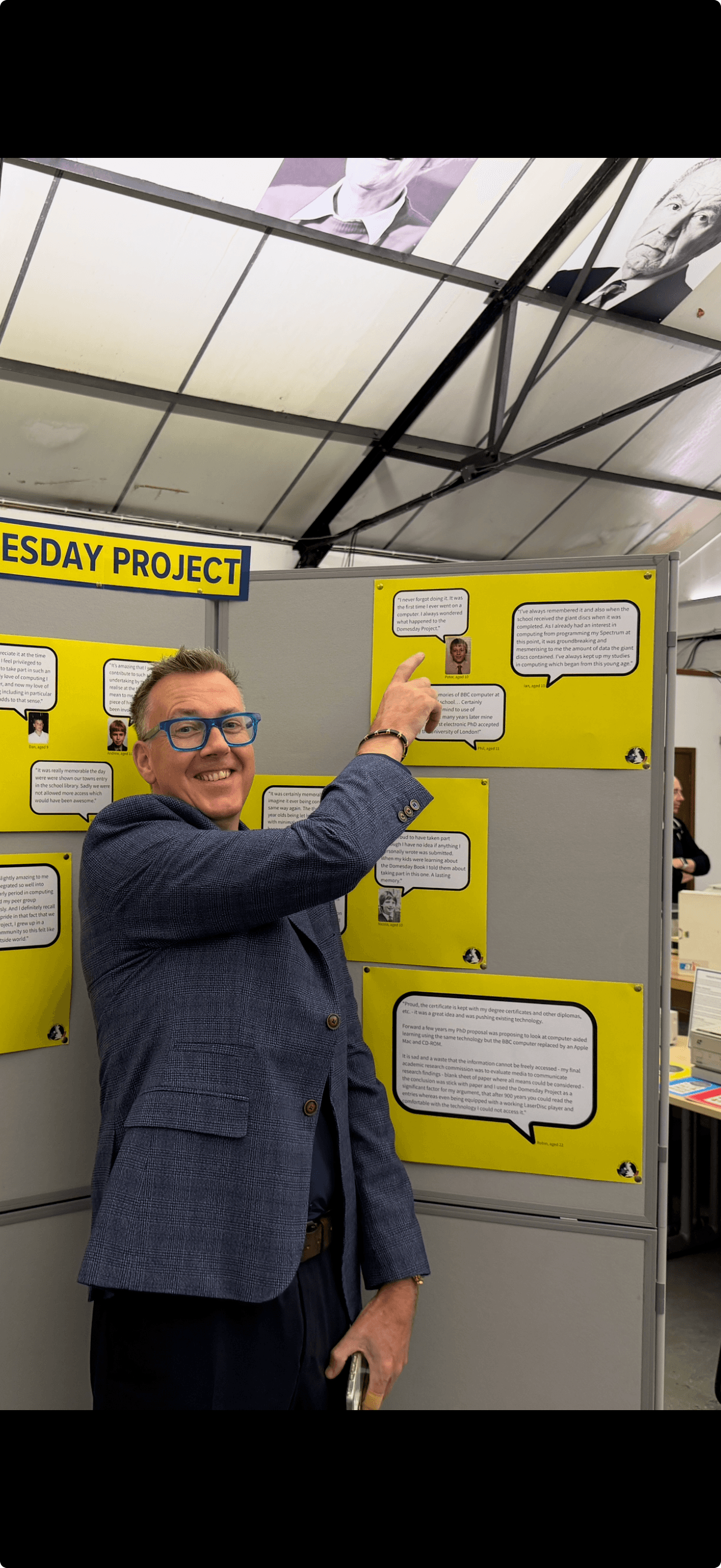
Last weekend there was an exhibition at the Centre for Computing History, In Cambridge, not far from where I live. The Domesday Project at 40. I saw an article about it on BBC News, looked into it and there was a contact form, which I filled in. I said I'd never forgotten it and always wondered what had happened to it. Once we typed our entries in, we never saw them again. We never saw the finshed project. The Exhibition was to include a few of the last working examples, so I persuaded my wife to come with me. There were many of the original technical people involved in the project giving talks, and it was really interesting. What I hadn't appreciated at the time (I was 10) was just how much of a technical challenge it was. Some of the work that on with this project laid the foundations for many of the things we take for granted today.
The word 'The'
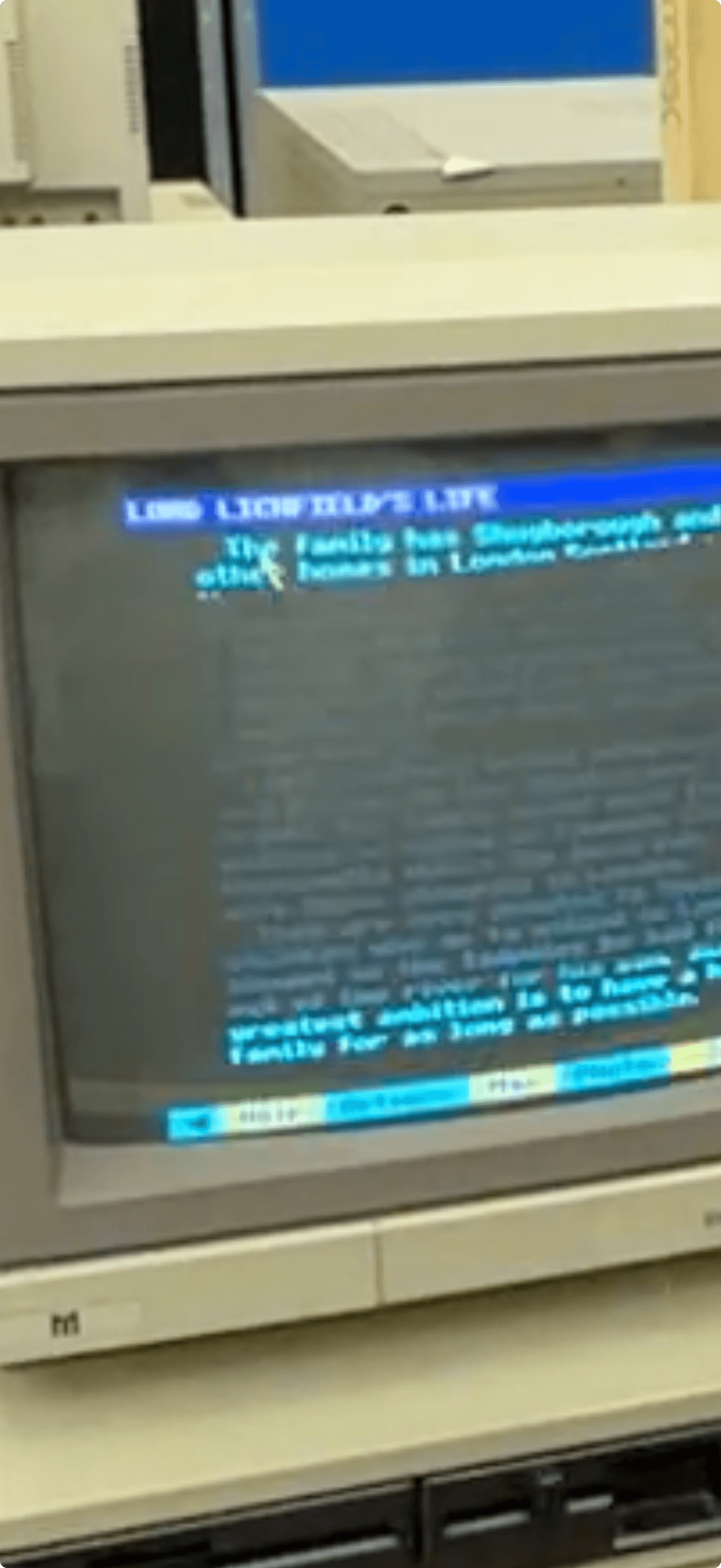
After the talks I got to play on the Domesday project. It's quite cumbersome to use compared to modern UI standards but after many trial and error attemptsI managed to find my original entry, and there it was. The first word I ever typed into a computer. The word 'The'. Not a copy of the word, the ACTUAL WORD itself. It was quite emotional if I'm honest. My 30 year career in IT, and it started here.. Right here.. 'The'. Amazing!
Further reading
The BBC's own account and later news coverage are still the best short primers. The Community Disc later came back online as Domesday Reloaded; the laserdiscs themselves are catalogued at The National Archives, and Domesday86 is recreating the original hardware experience.
- BBC Domesday Project
- Domesday at 40 — Centre for Computing History
- BBC Domesday Project 2026
- Domesday Reloaded
- What was the Domesday Project?
- Revisit the BBC's 1986 Domesday project
- The Domesday Book — The National Archives
- Data from BBC Domesday Project — The National Archives
- Shugborough Estate
- Domesday86
Questions
What was the BBC Domesday Project?
A 1986 BBC multimedia survey marking the 900th anniversary of the Domesday Book. Mostly Year 5 schoolchildren documented their local area — maps, interviews, photographs and short written pieces — stored on laserdiscs before the public internet.
What is Domesday at 40?
A 19 September 2026 exhibition and talks day at the Centre for Computing History in Cambridge, with original project engineers and some of the last working Domesday systems.
Can you still see original 1986 school entries?
A few working systems survive. The Centre for Computing History preserves them and invited original contributors to find their entries at the 40th anniversary event. BBC Domesday Reloaded later put Community Disc material on the web; that site now lives in The National Archives web archive.